Our approach
AI-assisted. Geologist-led.
We start with the public record, rank ground for uranium and a second metal together, and only take validated targets to the field. This page explains where we work, what we look for and how we get access.
Jurisdiction
Why the Northern Territory.
- Policy
- Uranium exploration and mining are permitted.The Northern Territory permits uranium mining. Western Australia, where our parent company is based, currently does not.
- Geology
- Uranium sits alongside other metals.The NT’s established mineral provinces host uranium together with gold, base metals and tungsten.
- Record
- Decades of public exploration data.The NT keeps a public open-file record of past exploration (NTGS GEMIS) and a public title register (STRIKE).
Commodities
Why uranium, and why a second metal.
Uranium is a fuel for low-emission nuclear power. Several countries are extending existing reactors and building new ones, and long-term fuel supply from stable jurisdictions like Australia is becoming more important to utilities.
Uranium is our lead commodity. Every area we pursue is also judged on a second metal (gold, copper, lead, zinc, tungsten or rare earths) that stands on its own merit, so each program has more than one route to value and isn't tied to one commodity price or one policy setting.
Method
How we find ground worth testing.
- 01
Historical data capture
We compile open-file NT exploration reports (drilling, geochemistry, geophysics and the reasons ground was given up) into one consistent, location-checked dataset.
- 02
AI-assisted reprocessing
Machine-assisted tools help us read old reports at scale, reprocess legacy data and rank ground for uranium and a second metal together, so patterns that were easy to miss become visible.
- 03
Geologist validation
Every AI-ranked target is reviewed by qualified geologists against the geology, the data quality and land access before we commit any money to it. Targets that don’t stand up are dropped.
- 04
Field test
Only validated targets go to the field: mapping, sampling, surveys and then drilling, with approvals and Traditional Owner consent in place first.
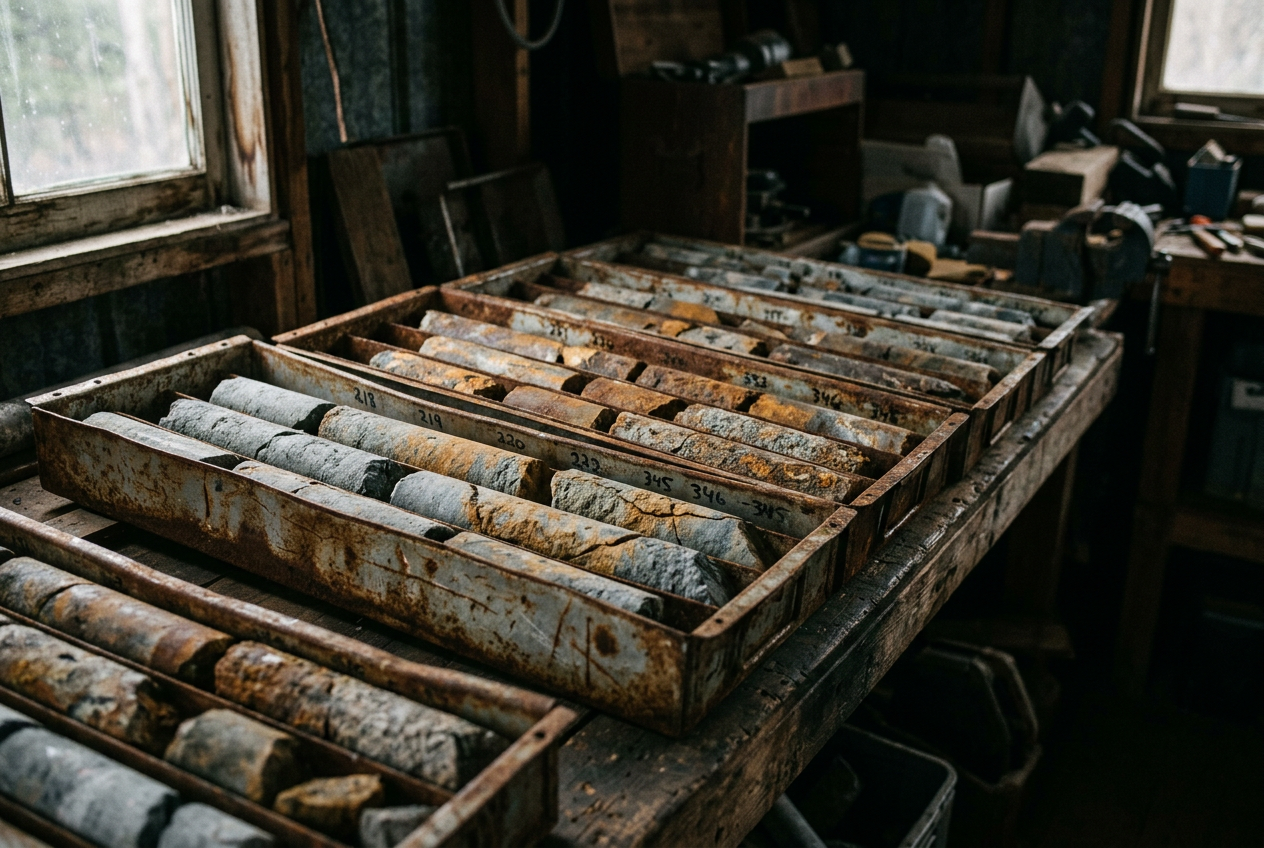
Our starting point is the Northern Territory Geological Survey's open-file record: historical company reports, drilling, geochemistry and government geophysics. We compile it into one geospatial dataset, use machine-learning tools to rank ground, and hand every result to a geologist.
Targeting
What we look for.
- Ground dropped for policy or corporate reasons, not geology
- Second metal recorded but never drill-tested
- Ground under-worked by its current holder
Access
How we get access to ground.
Re-application over relinquished ground
NT rules let ground be re-applied for after a short waiting period once a licence ends. We keep a standing watch on the register.
New exploration licence applications
Applications over open ground that our data work ranks highly.
Options, joint ventures and farm-ins
With holders who have ground they are not actively working. Confidential approaches are welcome.
Start a confidential conversationOur model is to add value through discovery and early definition, then partner with or sell to a group able to carry a project through development and approvals.